


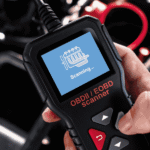


Few things are as worrying for drivers as seeing the check engine light come on. It can appear suddenly, sometimes without any noticeable change in how the car runs, leaving you unsure whether you can keep driving or if something serious is happening. The good news is that in many cases, the problem isn’t critical — and with a simple OBD2 scanner, you can find out what’s going on before heading to a repair shop.
What the Check Engine Light Really Means
The check engine light, also called the Malfunction Indicator Lamp (MIL), is part of your vehicle’s OBD2 system — an onboard diagnostics system that constantly monitors sensors and components related to emissions and performance. When it detects a fault, it stores a Diagnostic Trouble Code (DTC) and illuminates the warning light to alert you.
Not all alerts are the same. If the light is solid, it usually means there’s a minor issue that can be checked soon. If it’s flashing, it signals a more serious problem such as a misfire that could damage your catalytic converter — and you should stop driving immediately.
Common Causes of a Check Engine Light
Many different conditions can trigger the check engine light, ranging from something trivial to a sign of a larger fault. Here are some of the most common causes:
1. Loose or damaged gas cap – A gas cap that isn’t properly sealed can cause fuel vapor leaks and trigger an emissions warning. Check and tighten it first; this alone can often solve the issue.
2. Faulty oxygen sensor (O2 sensor) – This sensor measures oxygen levels in your exhaust. When it fails, your car may burn more fuel and perform poorly.
3. Worn spark plugs or ignition coils – Faulty ignition components lead to incomplete combustion, reduced performance, and misfires.
4. Faulty catalytic converter – A malfunctioning converter increases emissions and may cause rough idling or poor acceleration.
5. Mass air flow sensor issues – If the MAF sensor is dirty or damaged, it can confuse the engine computer about how much air enters the system, affecting fuel economy.
6. EGR or DPF problems (for diesel engines) – These components manage exhaust gases; when clogged or defective, they trigger persistent check engine lights.
What to Do First When the Light Comes On
Before rushing to the garage, follow these steps to determine whether the issue is urgent or something you can handle yourself.
1. Observe your vehicle’s behavior. Is the engine shaking, idling roughly, or losing power? Are you smelling fuel or exhaust fumes? If the answer is yes — or if the light is flashing — pull over safely and stop the car. Continuing to drive could cause damage.
2. Tighten the gas cap. Many people overlook this. After tightening, drive for a few miles; the light may turn off after the system rechecks itself.
3. Use an OBD2 scanner to read the code. This is the most effective way to understand the problem. Plug the scanner into the OBD2 port, turn the ignition ON (engine off), and scan for stored codes. The tool will show entries like P0171 (system too lean) or P0300 (random misfire). These codes tell you exactly where to start.
How to Read the Code and What It Tells You
Each diagnostic trouble code has a specific meaning. You can search them directly in the OBD2.com Code Database for clear explanations. For example:
- P0420 – Catalyst system efficiency below threshold
- P0171 – Air-fuel mixture too lean
- P0301 – Misfire detected on cylinder 1
These codes help you determine if the issue is something simple like a loose connector or more complex like a failing sensor. Once you understand the problem, you can decide whether to fix it yourself or schedule a mechanic visit.
Clearing the Light Safely
After resolving the issue, you can use your OBD2 tool to clear the code. Access the menu and select Erase Fault Codes. Restart the vehicle to check if the warning light has disappeared. If the light returns shortly after, the underlying fault likely persists and needs further inspection.
Recommended OBD2 Tools
If you want to understand your car before going to a mechanic, using a reliable diagnostic tool is essential. Here are three trusted options available at OBD2.com:
For quick check engine diagnostics: ELM327 Bluetooth 4.0 OBD2 Diagnostic Tool (iPhone & Android compatible)
For complete system scanning (engine, ABS, airbag, oil reset): OBD 1PRO Diagnostic Tool – Full System Scan, Lifetime Updates
For advanced maintenance and repair features: ThinkTool Mini – All Systems + 28 Reset Functions, Lifetime Updates
When to Visit a Mechanic
If your car shows signs like rough idling, reduced acceleration, fuel odor, or smoke from the exhaust, it’s safer to have it checked by a professional. Likewise, if you’ve cleared the code and the light reappears immediately, it’s a sign the issue is still active. Bring your diagnostic report with you — it helps the mechanic identify the root cause faster and may reduce labor time.
Conclusion
Seeing the check engine light come on doesn’t always mean a costly repair is ahead. Many times, it’s something simple you can inspect yourself. The key is not to ignore it. With a good OBD2 scanner and a bit of understanding, you can read the fault code, interpret it, and decide the right course of action — all before setting foot in a garage.
Discover all OBD2 diagnostic tools on OBD2.com and take control of your vehicle’s health today.
